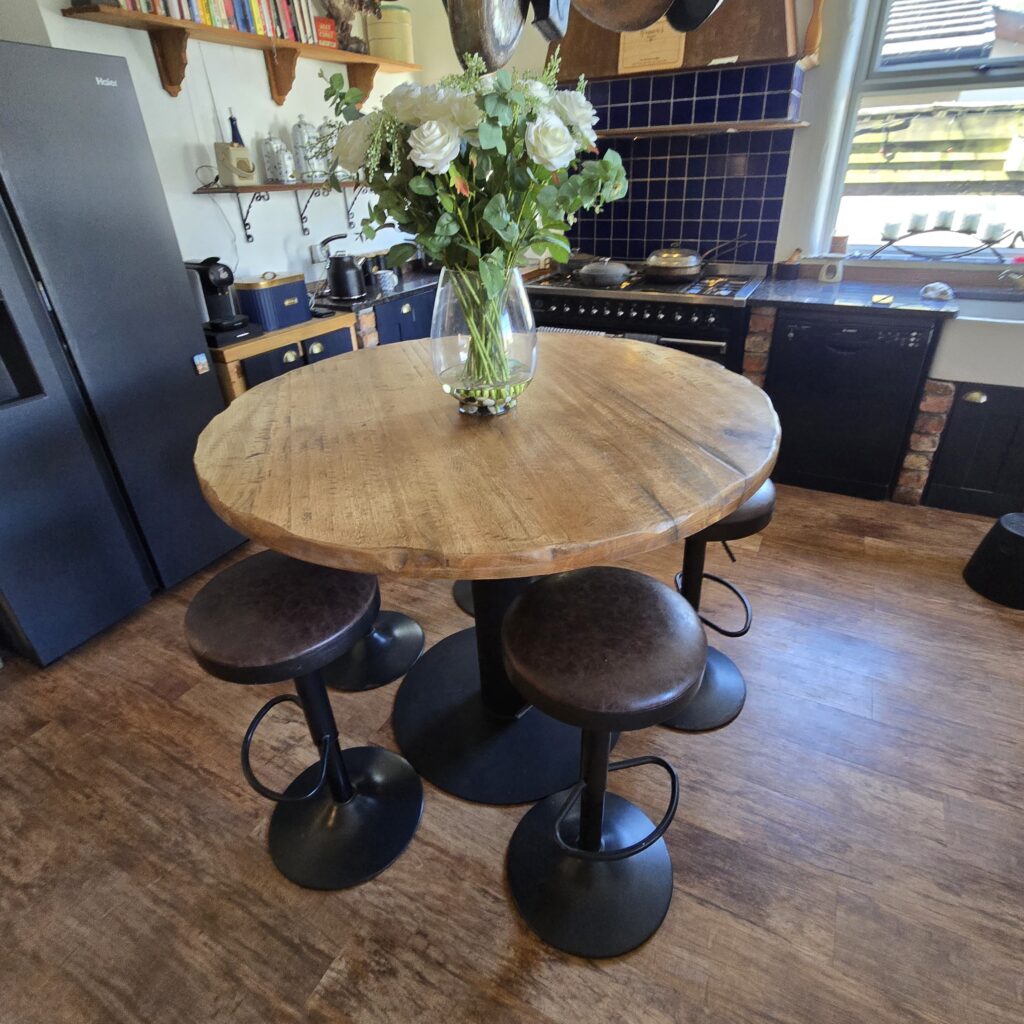
From Solid Oak Slabs to a Bespoke Dining Table
Every bespoke woodworking project starts somewhere, and sometimes all a customer needs is a simple idea. For this project, a customer got in touch asking if I could make her a rustic circular oak dining table with a black steel base.
Her specifications were straightforward: a 55-inch circular tabletop made from oak, paired with a black steel base. As I work in metric measurements, the first job was converting 55 inches into millimetres, which works out at 1397mm.
With the dimensions established, it was time to get into the workshop and turn the idea into reality.
Selecting and Preparing the Oak
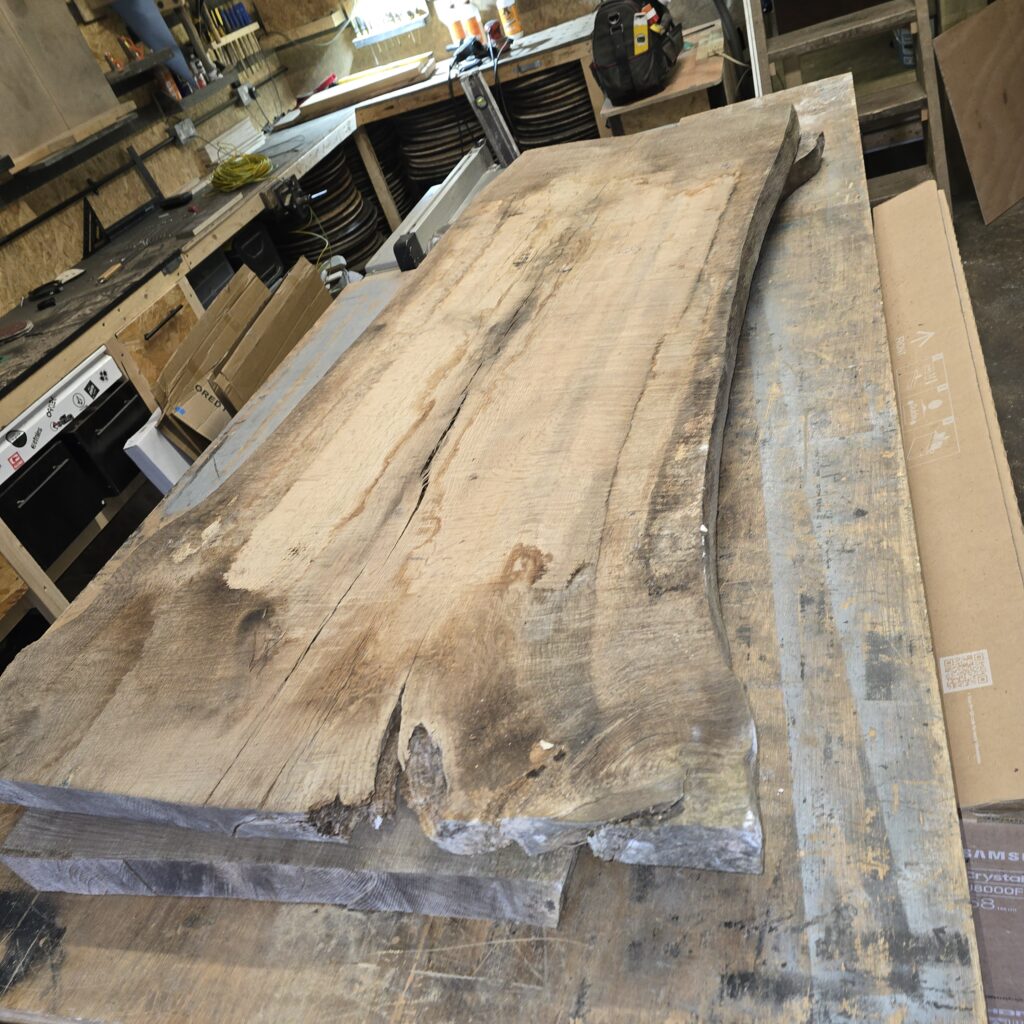
I started with some substantial oak slabs, approximately 70mm thick and measuring around 2,000mm long by 600mm wide. I cut them down to approximately 1,500mm long, leaving myself plenty of material to work with when it came to creating the circular tabletop.
Before I could start joining the timber together, the oak slabs needed to be surfaced flat. Unfortunately, my own CNC machine bed wasn’t quite big enough to handle these slabs, so I took them over to a friend who has a larger machine.
He ran each slab through his CNC machine, removing the uneven sections and creating a flat, level surface ready for the next stage of the build. This was an important step in the process, ensuring the slabs would fit together neatly and provide a solid foundation for the finished tabletop.
Once I got the oak back to my workshop, I could start preparing the individual boards.
Using my Makita DSP600ZJ track saw https://www.makitauk.com/product/dsp600, I cut the slabs into four strips, each approximately 300mm wide. These would form the main sections of the tabletop.
To join everything together, I used my Festool Domino DF500 https://www.festool.co.uk/products/domino-jointing-system/jointing-machines/578464—df-500-rq-plus-gb-230v, cutting slots for four 50mm Dominos along each joint. This helped with alignment and created strong, accurate joints when gluing the tabletop together.
There was just one small problem: I didn’t quite have enough width to achieve the full 55-inch diameter I was aiming for.
Luckily, I found a suitable oak offcut that would do the job. I put this through my Ooznest CNC machine https://ooznest.co.uk/ to flatten it to the same thickness as the other boards, giving me the extra width I needed.
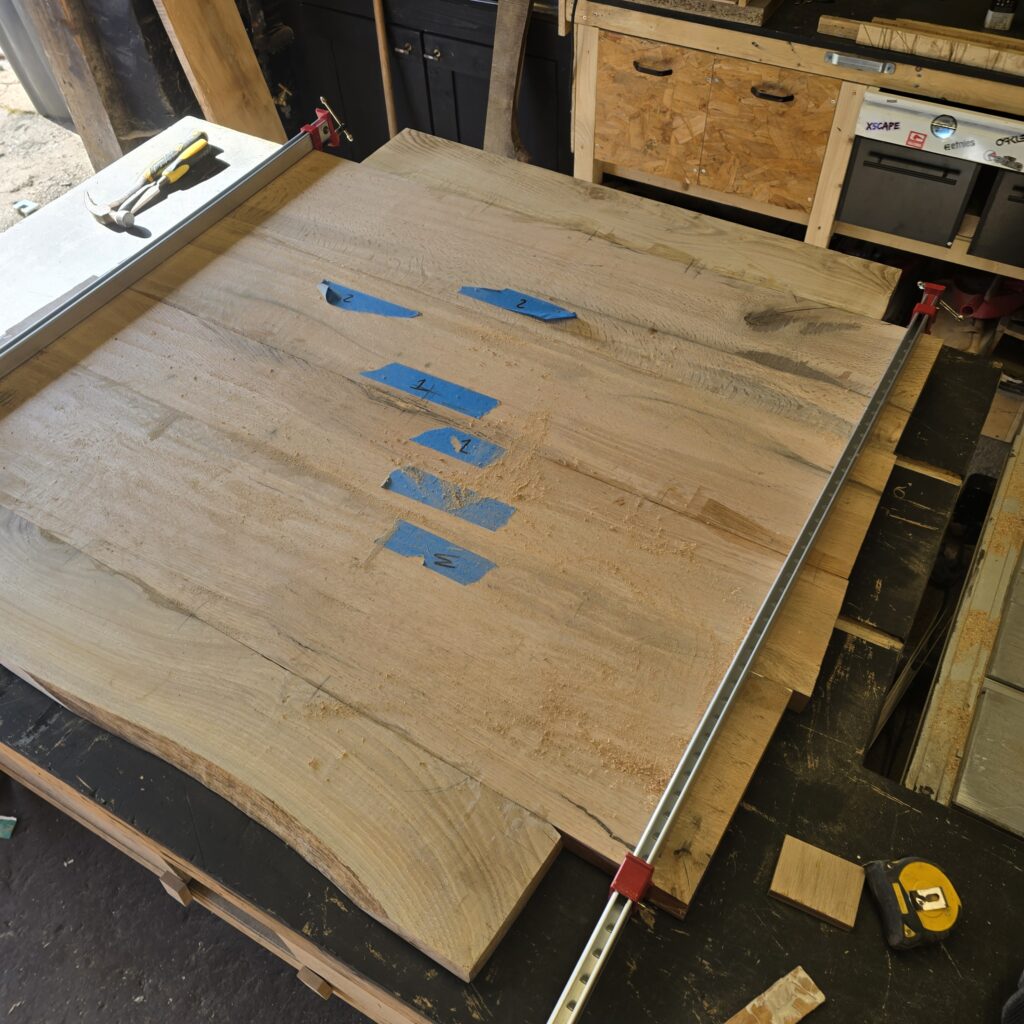
With all the timber prepared, it was time to glue everything together and create the solid oak tabletop.
Cutting the Perfect Circle
Once the glue had cured, I had a substantial solid oak panel ready to be transformed into a circular dining table.
I used my Makita laminate trimmer https://www.makita.co.nz/products/model/DRT50Z to cut the circular shape. Although it did the job, it took a few more passes than I would have liked.
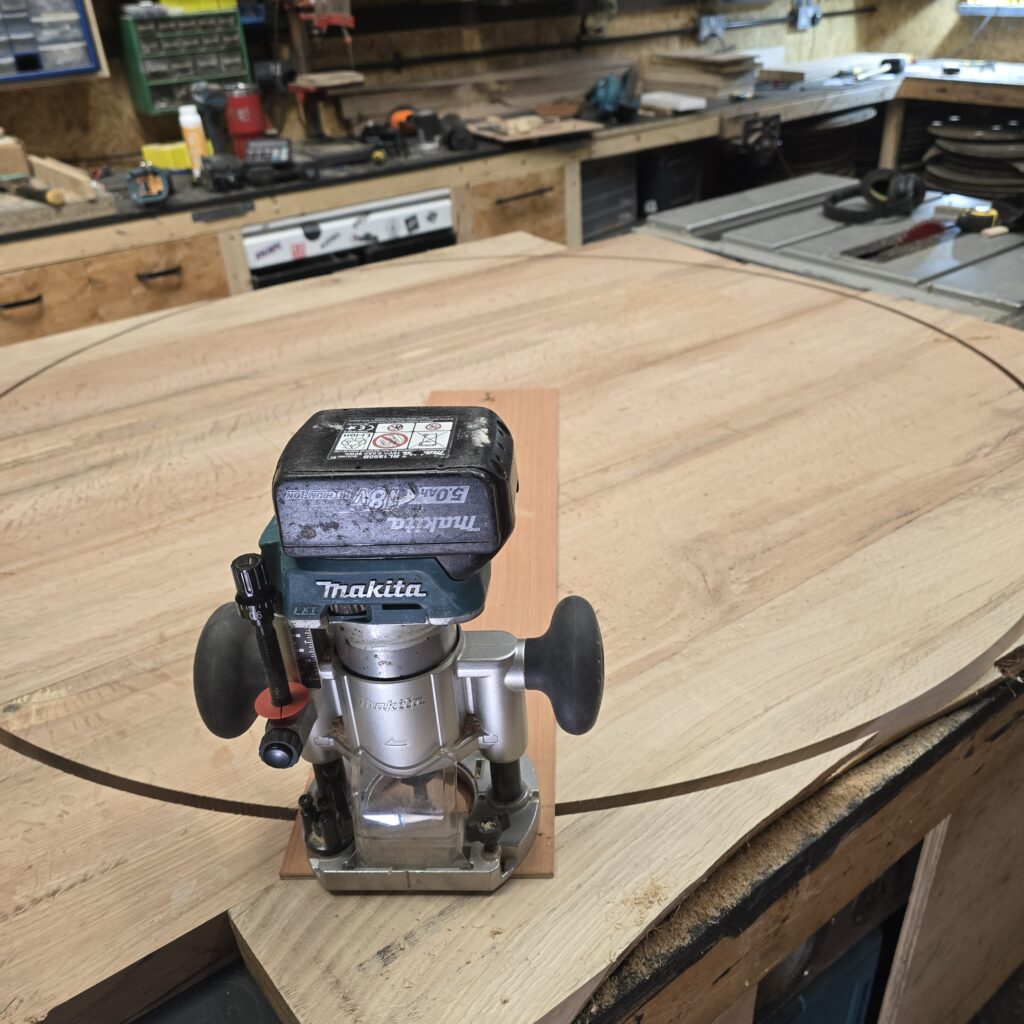
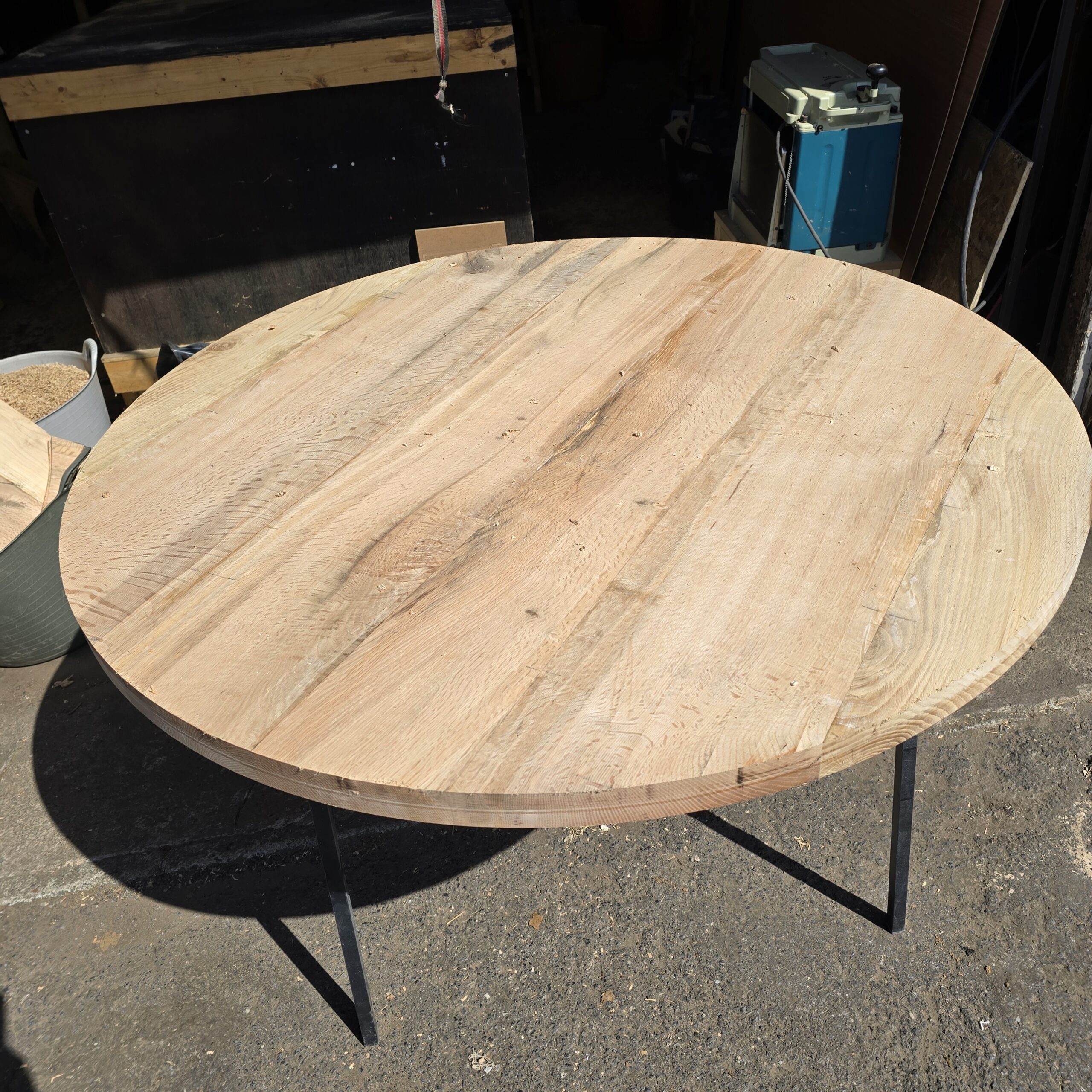
If I were doing this project again, I’d definitely invest in a half-inch router for this stage. With a tabletop of this size and solid oak this thick, having the extra power and capacity would make the job much easier.
Adding the Rustic Character
I didn’t want this table to look like a perfectly machined, mass-produced piece of furniture. The whole idea was to create something with character, natural imperfections and a rustic finish.
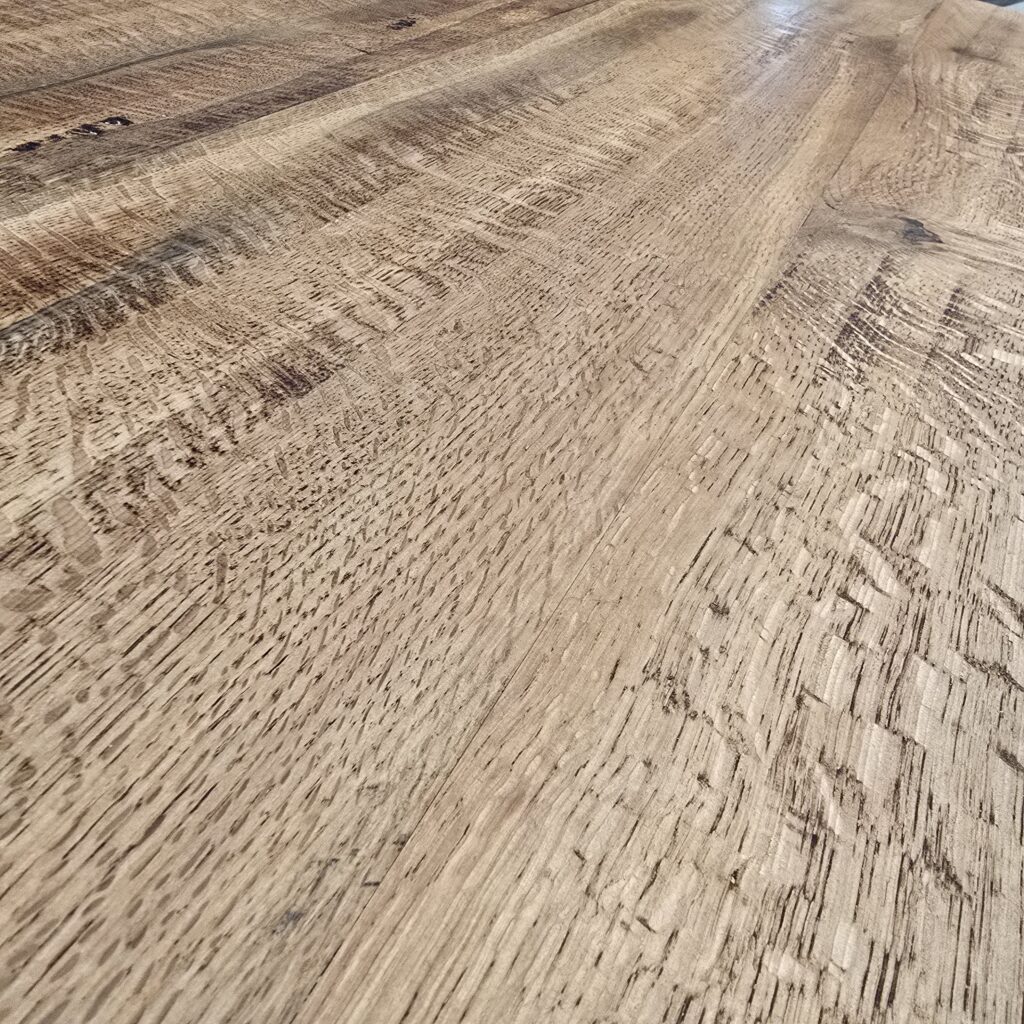
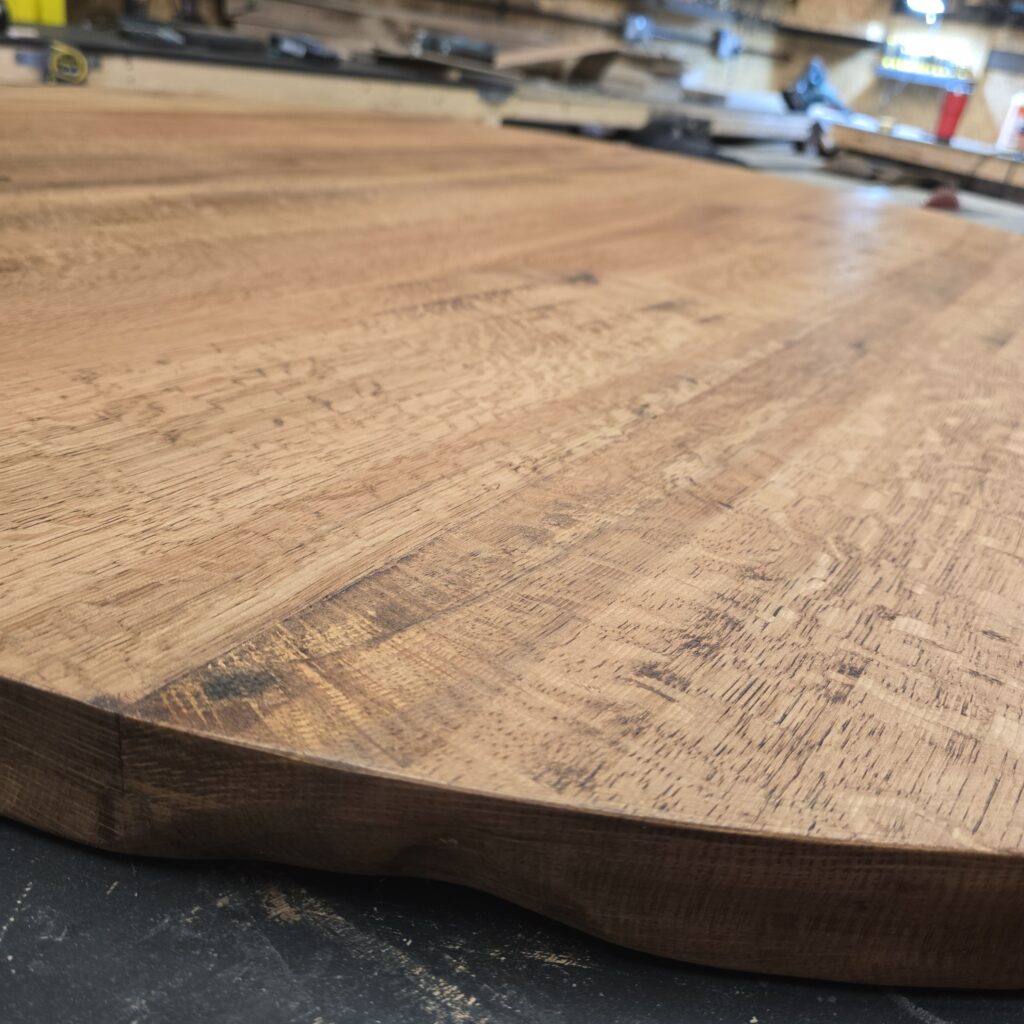
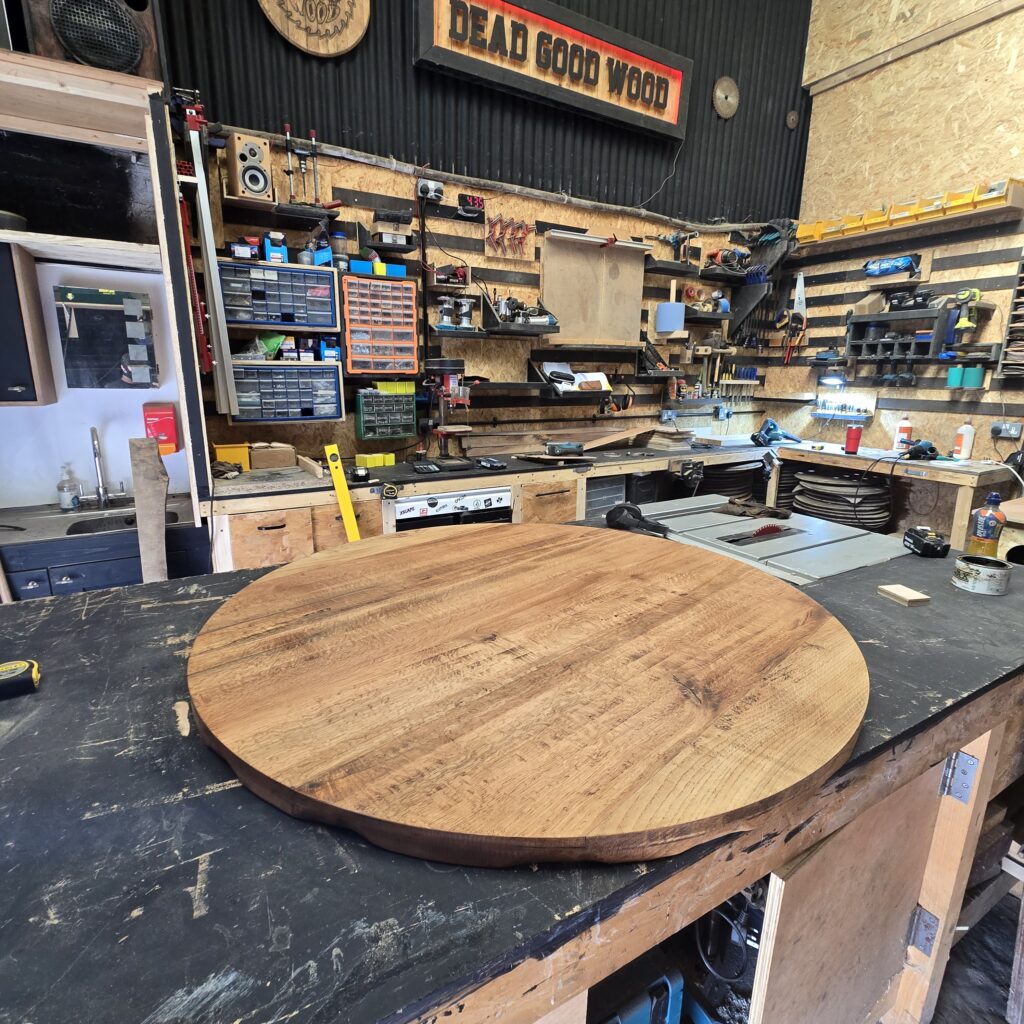
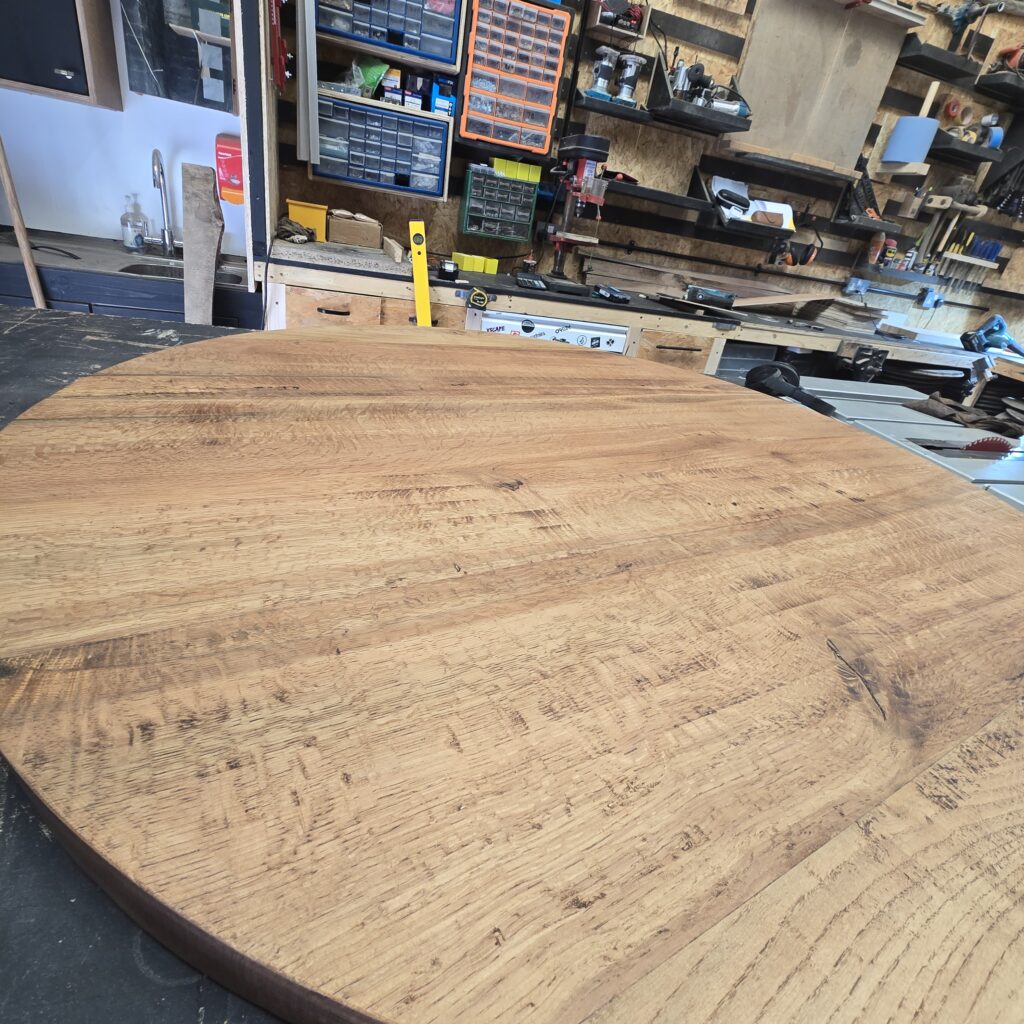
To achieve this, I used an angle grinder fitted with a flap disc to add some rustic features to the edges and surface of the oak.
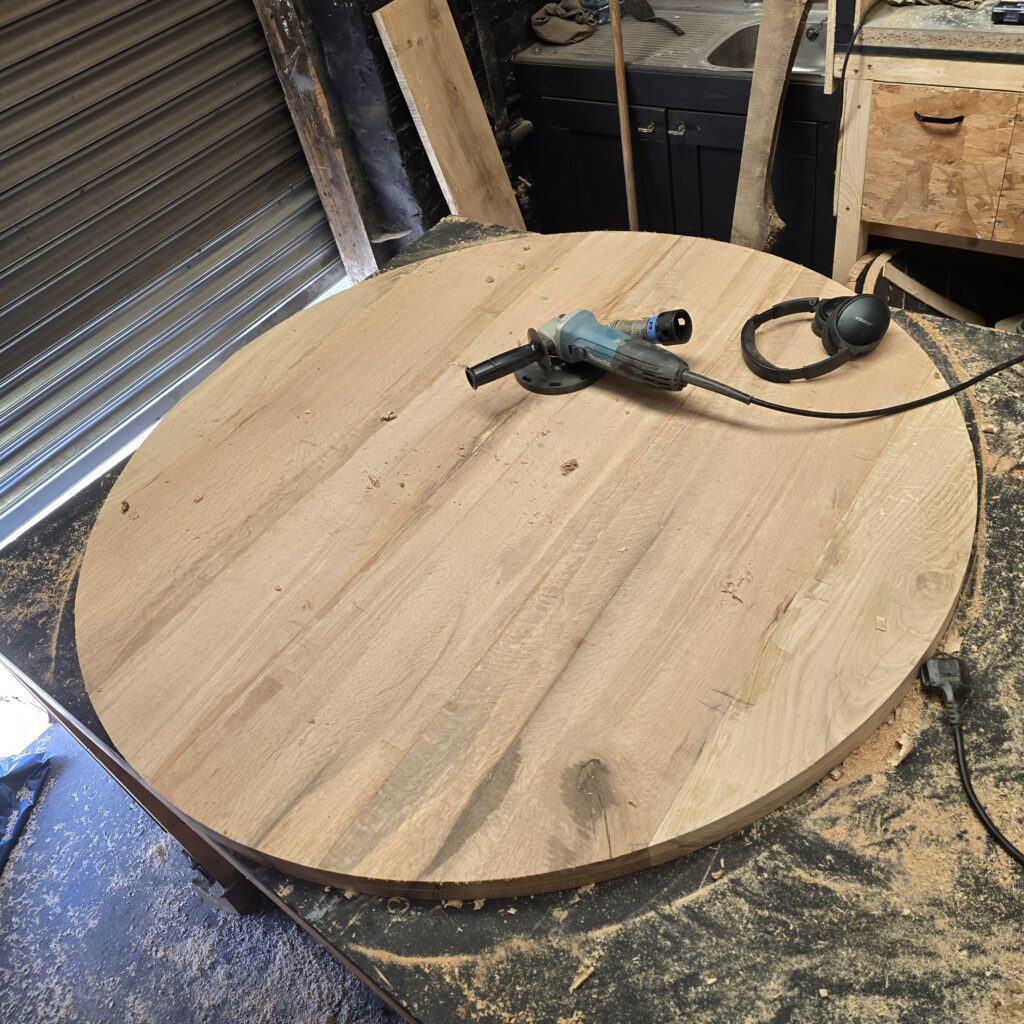
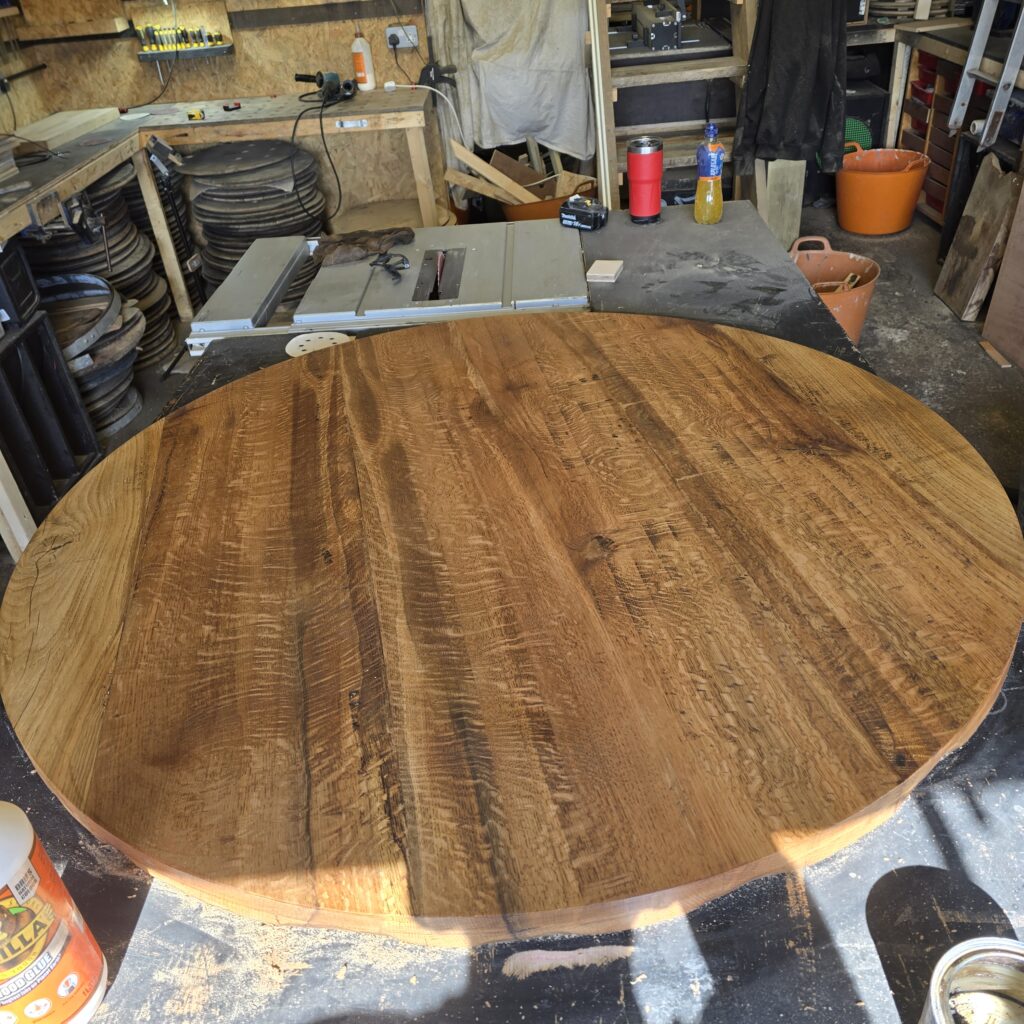
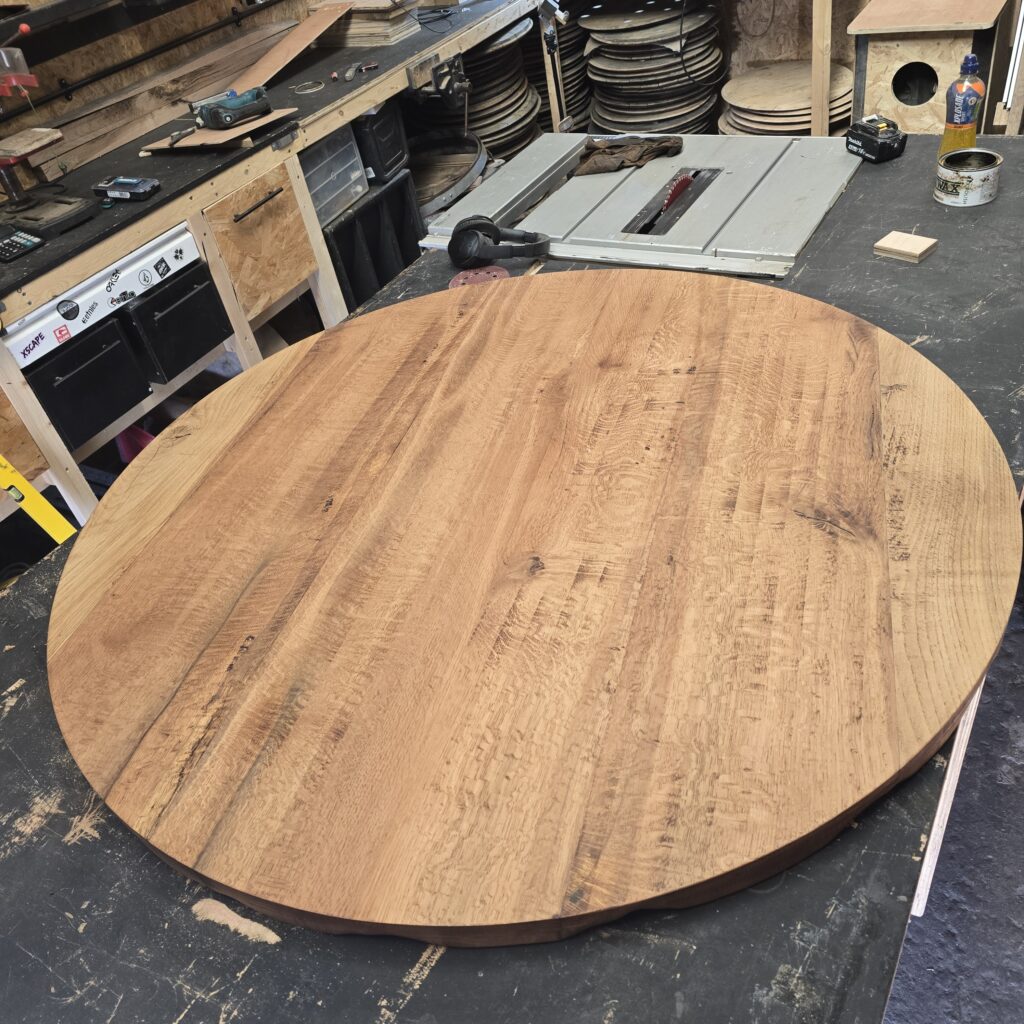
I then sanded the entire tabletop, carefully working the surface while leaving some of the natural imperfections visible. These little details are what give solid oak furniture its individuality.
Every piece of oak has its own grain pattern, colour variations and character. Rather than hiding all of that, I wanted to make it part of the finished design.
The result was a chunky, rustic circular oak tabletop that would become the centrepiece of the dining area.
Fabricating the Heavy-Duty Black Steel Base
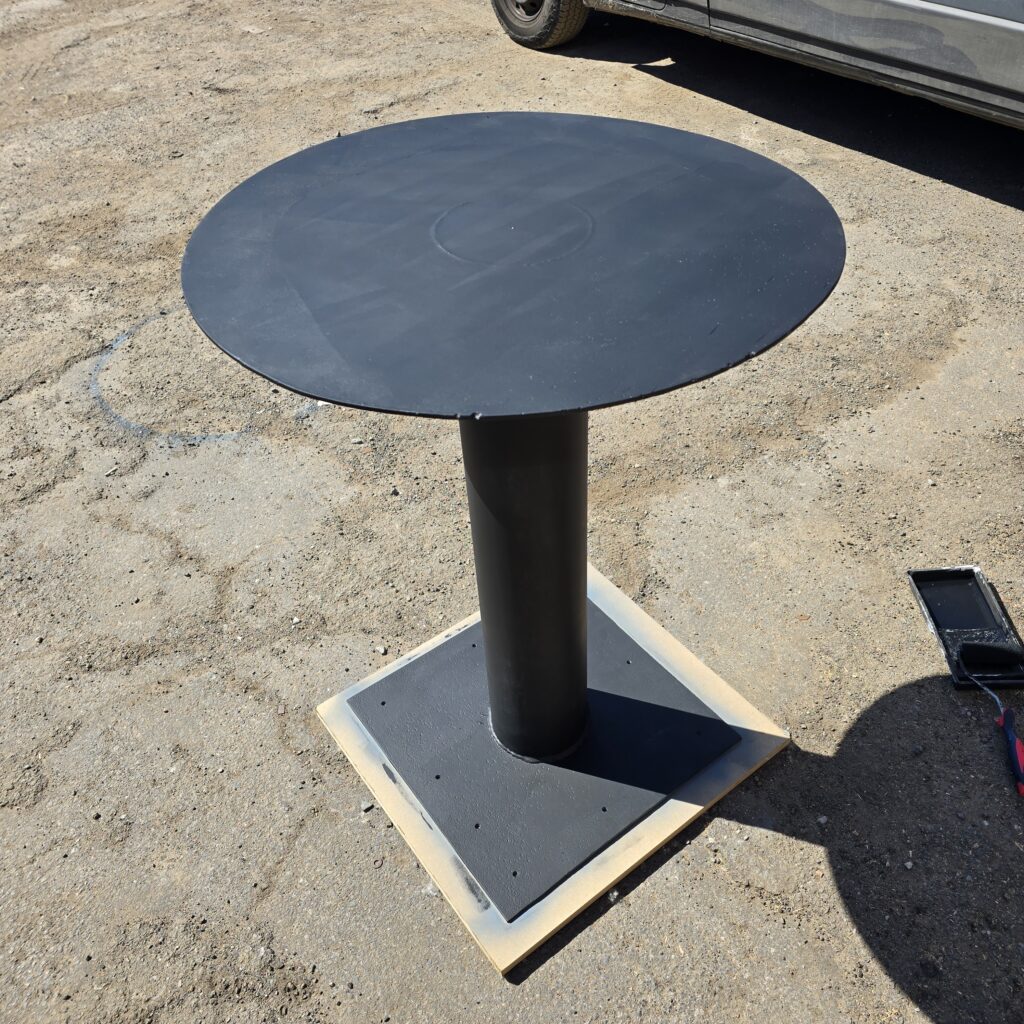
With the oak top taking shape, I turned my attention to the steel base.
I was fortunate enough to get hold of a substantial piece of steel tube, approximately 150mm thick, originally used for ground sampling in the construction industry.
One of my initial concerns was whether the weight of the oak tabletop could make the table unstable or cause it to topple. However, the sheer weight of the steel tube gave me much more confidence in the design.
I cut the tube to the required length, then welded a circular 5mm steel plate to the bottom to create the foot. At the top, I welded on a square steel plate to provide a solid fixing point for the tabletop.
I drilled eight fixing holes around the edges of the top plate, allowing the oak top to be securely attached to the base.
Once the welding and fabrication were complete, I primed the steel and sprayed it black.


The black finish provided a striking contrast against the natural oak, giving the table a combination of rustic warmth and industrial style.
Finishing the Oak Tabletop
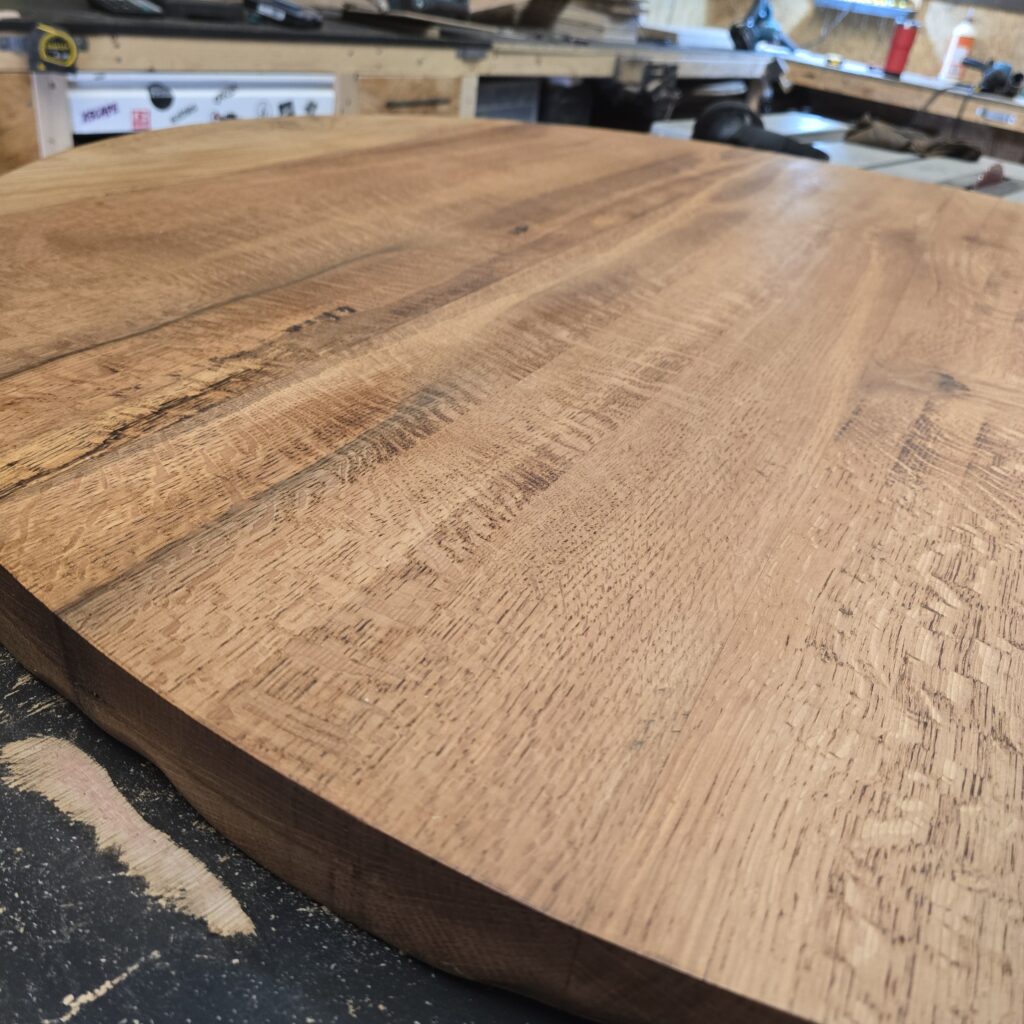
Before attaching the top to the steel base, I fitted threaded wood insert nuts into the underside of the oak.
These provide secure fixing points for the bolts, making it possible to attach the tabletop firmly while allowing the table to be dismantled for transport if necessary.
For the final finish, I applied Briwax Dark Oak wax https://www.rustins.ltd/briwax/our-products/oils/briwax-wax-polish to the tabletop. This enhanced the natural grain of the timber, deepened the colour and helped bring out the rustic character I’d worked to create.
The dark oak finish complemented the black steel base perfectly, bringing the two materials together into one cohesive design.
Delivery and Final Assembly
When it came to delivery day, I transported the table to the customer’s home in two separate pieces: the oak tabletop and the steel base.
This made it much easier to handle and move the table into position.
Once everything was in place, I secured the tabletop to the base using the fixings I’d prepared in the workshop.
And just like that, the job was done!
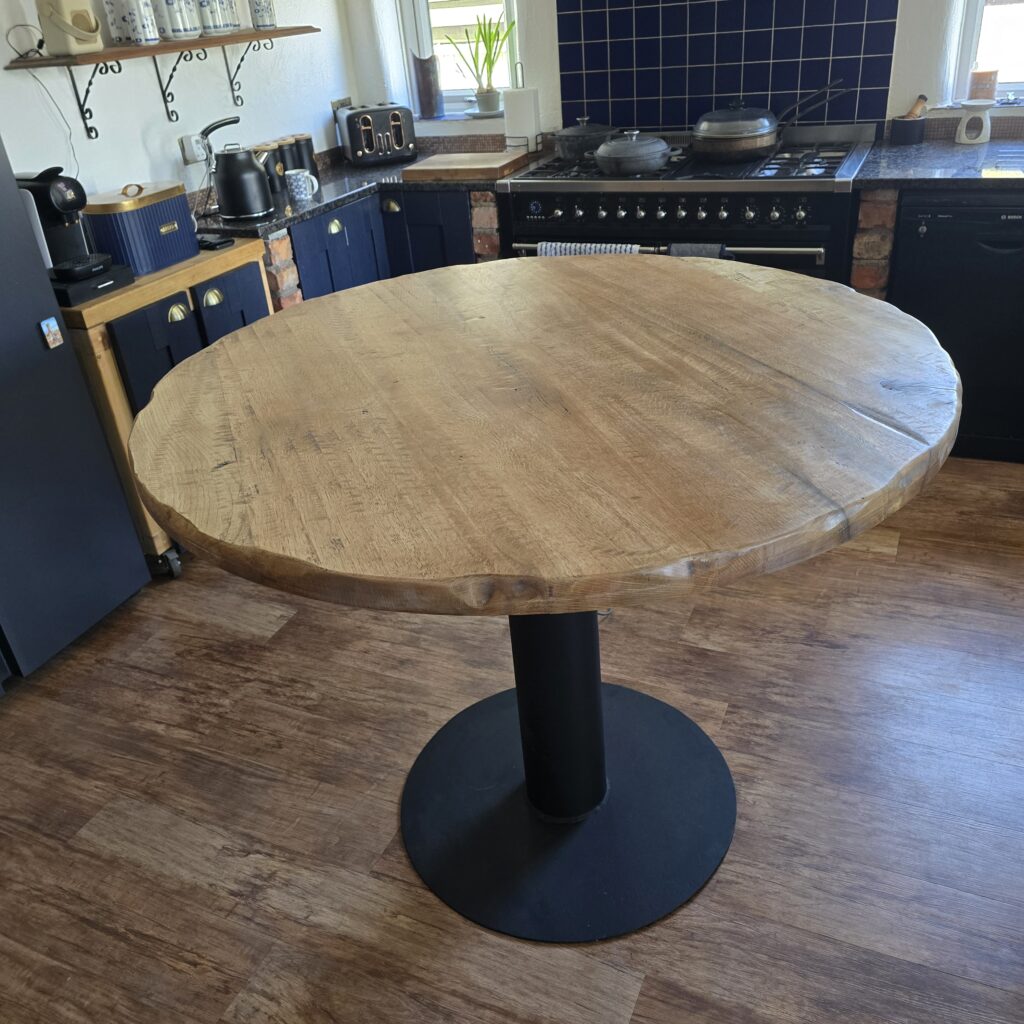
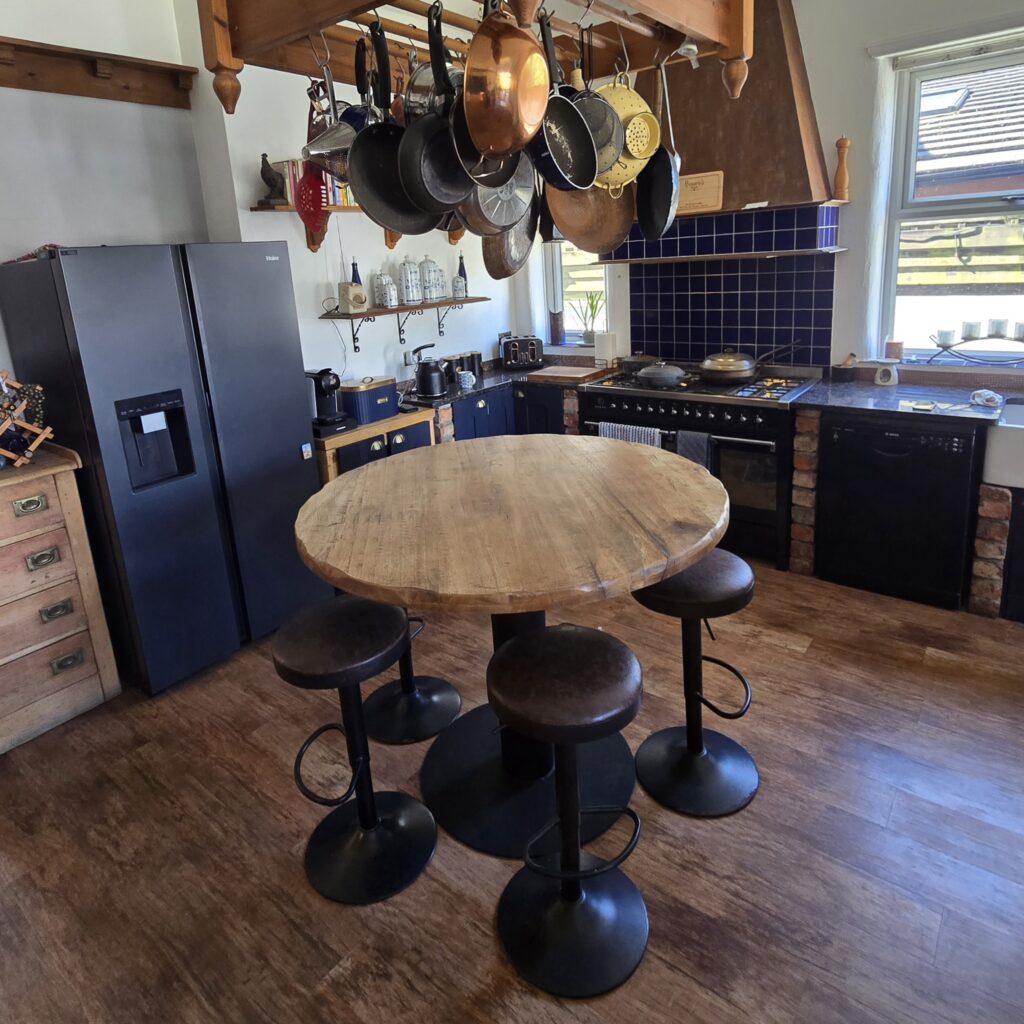
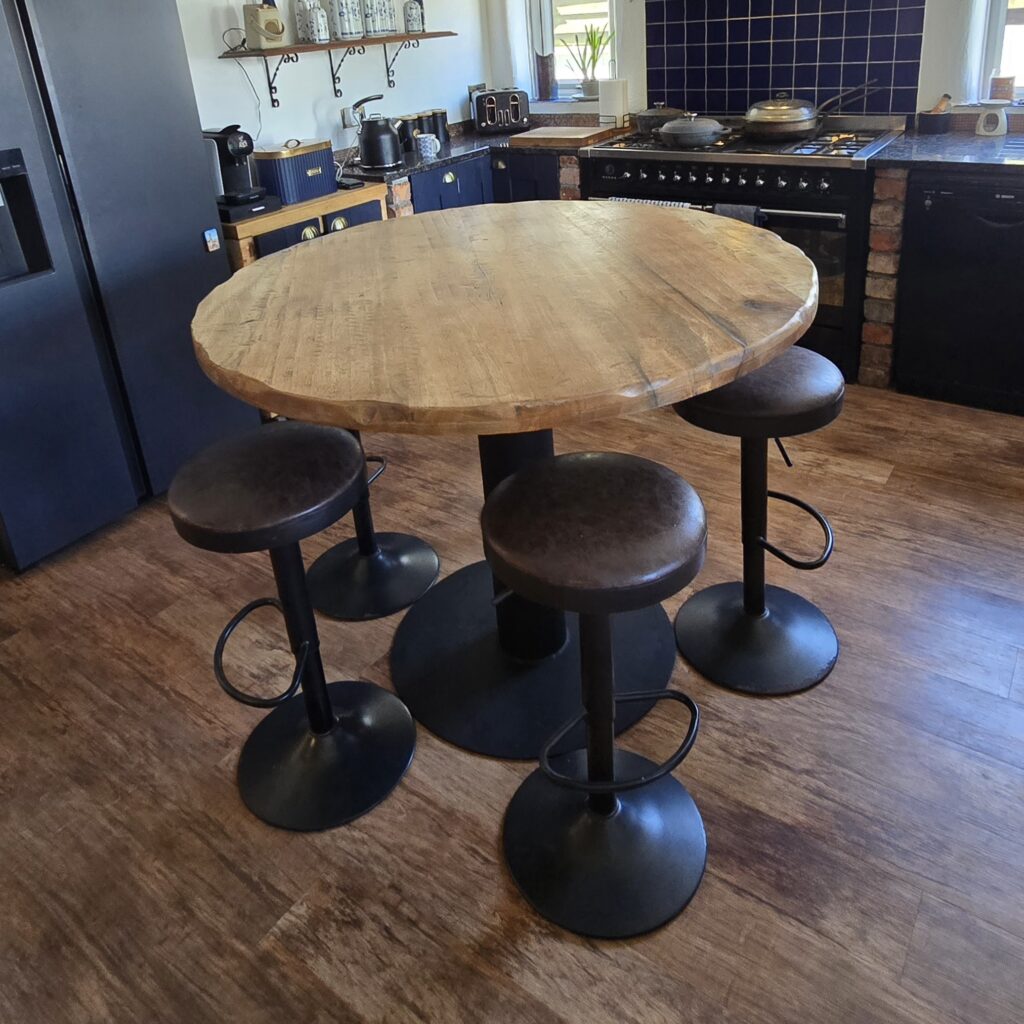
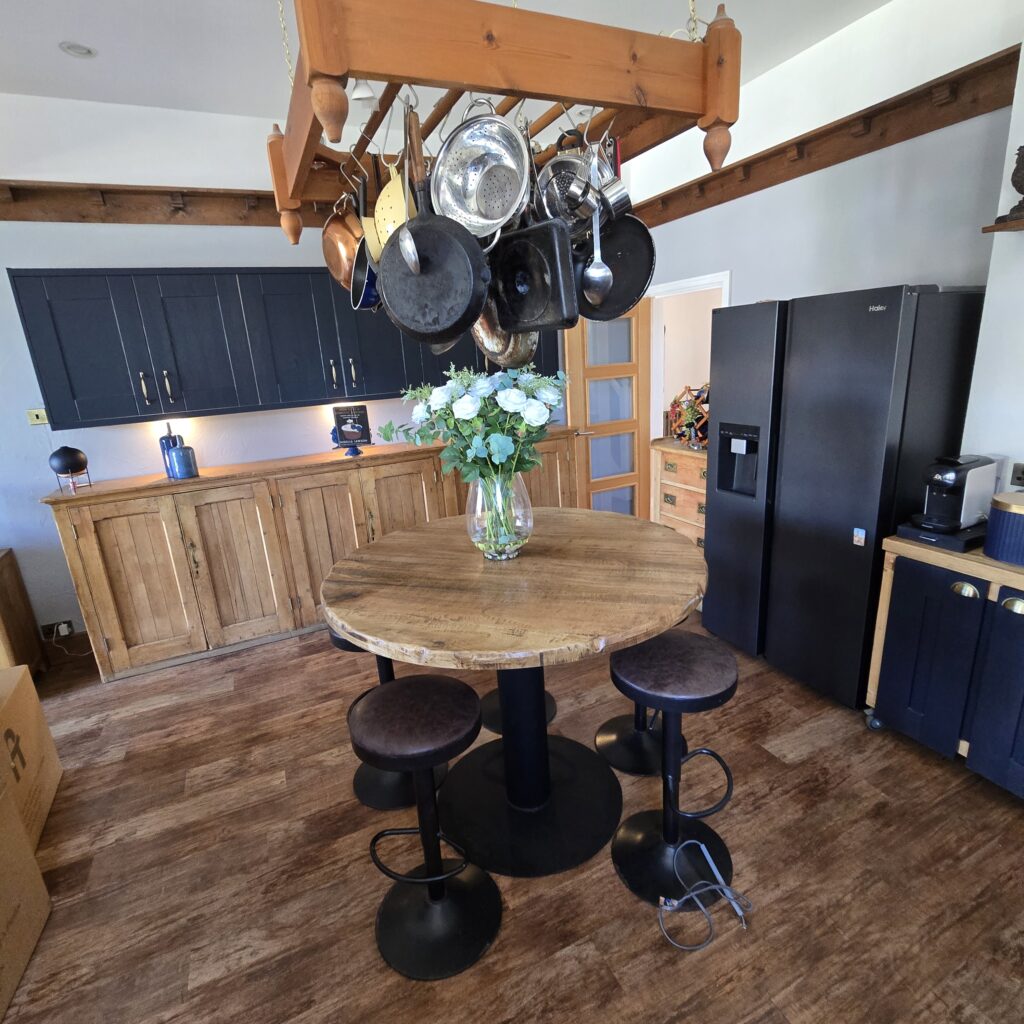
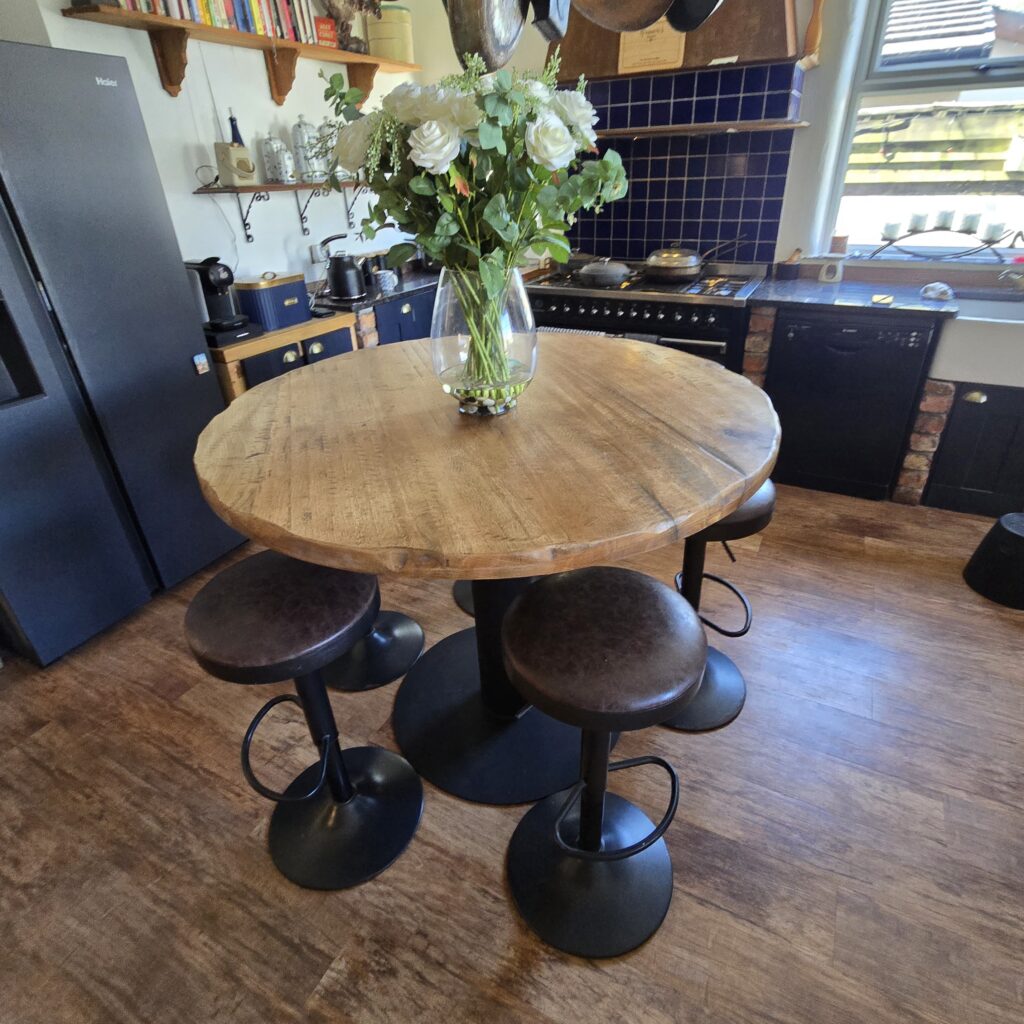
The finished table combined a substantial solid oak top, a rustic hand-finished surface and a heavy-duty black steel base. It was exactly the type of bespoke furniture I enjoy making: something built around a customer’s requirements, using quality materials and a mixture of traditional woodworking skills and modern CNC technology.
Looking for a Bespoke Oak Dining Table?
At Dead Good Wood, I enjoy creating unique pieces of furniture that combine natural timber with practical, individual designs.
Whether you’re looking for a rustic oak dining table, an industrial-style table with a steel base or a completely bespoke piece designed around your own measurements, I’m always happy to discuss your ideas.
No two pieces of timber are exactly alike, and no two bespoke projects need to be the same.
Got an idea for a table of your own?
Get in touch with Dead Good Wood to discuss your requirements and let’s see what we can create together.
Visit DeadGoodWood.co.uk to find out more about our bespoke woodworking and custom furniture.